Serious horse buyers move fast and ask technical questions. If you are thinking about selling your Templeton equestrian property, you want clean answers ready and the facility showing at its best. In this guide, you will learn which documents to assemble, the barn and site improvements that matter most, how to present water and pasture capacity, and the wildfire and safety steps buyers expect in San Luis Obispo County. Let’s dive in.
Start with permits and proof
Getting your paperwork in order up front shortens due diligence and builds trust. Create a simple digital folder and a printed packet you can hand to qualified buyers.
Core documents to gather
- Recorded deed, APN, parcel map or survey, and a current preliminary title report that shows easements and restrictions.
- Building-permit history and final sign-offs for the home, barns, arenas, hay structures, shops, staff housing, and any mobile or manufactured units.
- Well file: well permit, well completion report, any pump tests or yield records, and storage-tank capacities. The County’s well program page explains permits and where to find records for owners and drillers. See the County’s well-permitting resources and searchable records on the Environmental Health site at the County’s well program page (owners and drillers). You can review those resources at the County’s well-permitting page for well program and records.
- Septic file: as-built plans, permits, maintenance, and any Local Agency Management Program correspondence. SLO County enforces OWTS and LAMP standards; review details on the Onsite Wastewater and LAMP page.
- Operation files if you board or train: boarding agreements, occupancy and revenue summaries, staffing arrangements, and insurance certificates.
Ag contracts and tree rules
- If the property is or was enrolled in the Williamson Act, disclose it early. Contract status can affect taxes and what future owners can build. Learn more on the County’s Williamson Act eligibility page.
- Oak woodland and heritage oak protections may limit clearing. Document any past removals and permits. Review County guidance for oak woodland tree removal requests.
If you operate commercially
If you collect fees for boarding or training, confirm the use is permitted for your parcel and keep any prior discretionary approvals in your packet. Clear documentation of permitted uses reduces lender and appraisal questions.
Prioritize barn and site improvements
Present a safe, clean, and efficient operation. Focus first on items buyers spot in the first five minutes.
Urgent fixes before showings
- Deep-clean stalls, wash racks, tack rooms, feed areas, and high-traffic zones. Remove manure piles and odor sources. Daily routines signal biosecurity and care. For practical routines, see extension guidance on barn management.
- Repair top rails, loose posts, and gates. Replace unsafe latches and remove barbed or hazardous wire in high-use areas.
- Mark trailer parking and ensure an easy turning radius to the barn and arena.
- Label electrical panels for barn and arena circuits. Correct obvious hazards and retain receipts or a simple letter from a licensed electrician for recent work.
High-impact, moderate cost upgrades
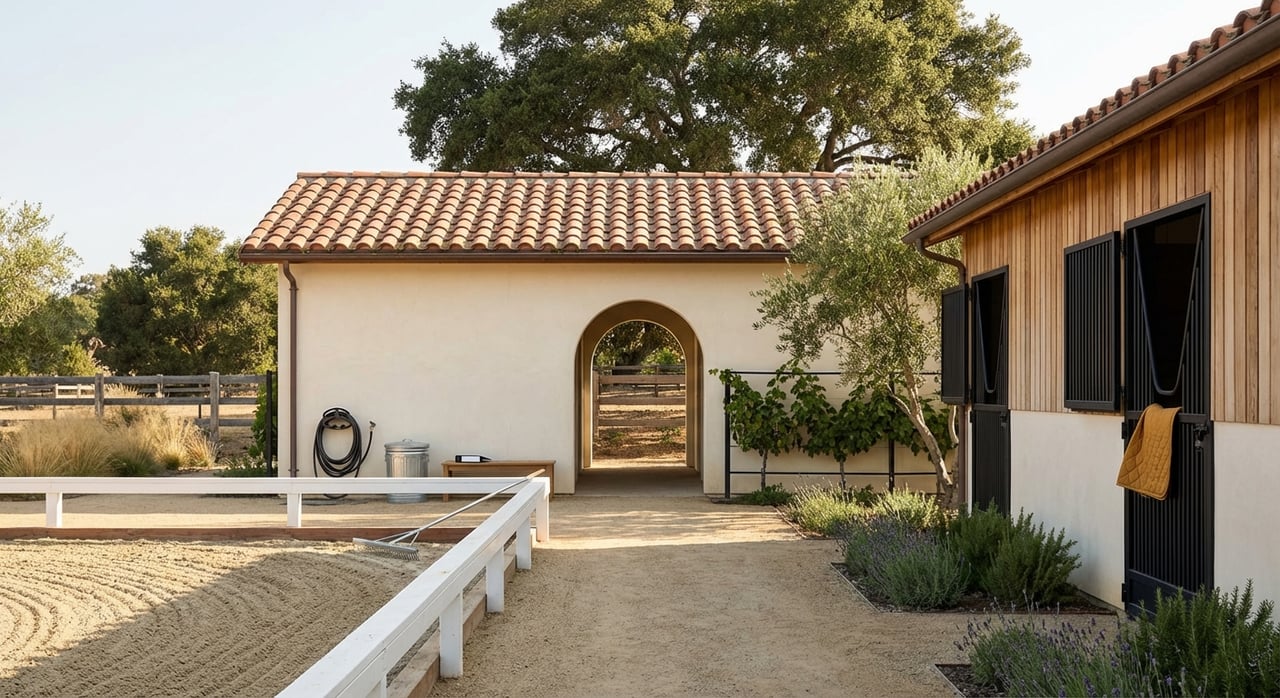
- Arena footing and drainage: drag and grade, fix low spots, confirm even compaction, and show how perimeter drainage works. If you irrigate the arena, document that system.
- Barn workflows: functional wash racks, ventilated tack rooms, stall mats where appropriate, and secure hay storage separate from stalls.
- Water reliability: service pumps and filters, confirm float valves on auto-waterers, and label storage tanks. Keep a clear summary of well yield with recent pump test results.
- Strategic fence upgrades: add visible top rails in high-traffic zones and use welded pipe or three-rail where it improves safety and presentation.
Nice-to-have touches
- Clean, permitted manager or staff quarters if applicable.
- Simple, refreshed signage that outlines pasture rotation and basic biosecurity protocols. It signals professionalism to trainers and program operators.
Show pasture, manure and water care
Pasture and stocking
Create a one-page pasture overview: acreage per paddock, water points, and typical stocking ranges by season. Use neutral language and back up estimates with photos and reseeding notes. For best-practice guidance, reference UC ANR resources on stocking rates and pasture rotation.
Manure and biosecurity
Outline how often you muck stalls and paddocks, where you store material, and whether you compost or haul. Keep storage away from wells and watercourses and use covered or contained systems to reduce flies and odor. For practical barn and manure routines, see extension guidance on barn management.
Water reliability and stormwater
List pump capacity in gallons per minute, tank totals, and seasonal notes. Include a simple map of distribution lines and irrigation zones. Riding arenas and compacted yards can change runoff, so note existing erosion controls and any County-required post-construction stormwater measures you maintain.
Wildfire and emergency readiness
Templeton’s Mediterranean climate means wildfire readiness is a material concern for buyers, insurers, and lenders. Show that you manage fuels, plan evacuations, and support firefighter access.
Defensible space and Zone 0
- Follow California’s defensible space standards under PRC 4291, with zone-based fuel reduction out to 100 feet from structures. Review details on CAL FIRE’s defensible space page.
- AB 3074 directs an ember-resistant Zone 0 within 0 to 5 feet of structures in mapped areas. Check current local guidance for your parcel. A helpful overview of Zone 0 concepts is available from Sonoma Valley Fire’s ember-resistant zone explainer.
Evacuation and fire access
- Keep a printed barn evacuation plan by the tack room, label halters and ID tags, and practice trailer loading. For large-animal disaster planning, see UC Davis Center for Equine Health.
- Document driveway width, gate codes, turnarounds, and on-site water available for firefighting. Buyers and inspectors will verify basic access standards in rural settings.
Market to serious horse buyers
Listing essentials
Include a concise feature list: permitted use summary, irrigated acres, number of pastures and run-ins, stall count and barn features, arena dimensions and footing, number of wells and storage gallons, septic type and permit status, and any recorded trail easements. Photos should show barn interiors, footing quality, fencing, water systems, and trailer access.
Build a clean data room
Upload your permits, well and septic documentation, title and easements, Williamson Act status, and any oak-removal permits. If you run an operation, add a 12 to 24 month P&L, a client roster, a manager job description, a sample boarding agreement, and an equipment list. Include maintenance logs for arenas, pumps, fencing, and recent electrical or structural work.
Show-day guidance
Keep horses in a clean holding paddock and lead a quiet, guided tour that highlights simple workflows: feed, tack, wash, turnout. Point out redundancies that reduce risk, like spare tanks or dual pumps. Hand out a one-page factsheet with stall sizes, arena dimensions, irrigated acres, well GPM, tank gallons, and distance to nearby riding options.
Avoid common escrow friction
- Unknown or inadequate well yield discovered during buyer testing. Preempt with a current pump test and a written summary of storage.
- Septic failures or systems not sized for planned staff or guest use. Provide LAMP documentation and recent service records.
- Unpermitted barns or arenas discovered during appraisal. Gather permit history early and be transparent about any past work.
- Oak woodland removal notices or mitigation obligations that are not disclosed. Share permits and any recorded conditions up front.
- Williamson Act enrollment or other ag contracts that affect development assumptions. Provide current status and explain implications clearly.
Pre-listing actions that shorten escrow
- Pull preliminary title and confirm recorded easements.
- Order a basic pump test and summarize well yield and storage totals.
- Schedule a septic inspection and secure LAMP documentation as needed.
- Get a barn and structural safety review, and outline any known unpermitted work with a remediation path.
- Create a one-page equine factsheet that answers common buyer questions.
Your 30/60/90-day plan
- 0 to 30 days: assemble title and permit packet, request well and septic files, deep-clean the barn and stalls, repair critical fencing and gates, remove visible manure piles, and draft your one-page factsheet.
- 30 to 60 days: address septic or electrical items, tidy and separate hay storage, schedule arena dragging and minor footing touchups, and scan well, septic, and building documents into your data room.
- 60 to 90 days: confirm defensible space status and keep proof of any recent inspections, document oak or tree permit conditions, organize basic P&L if operational, and brief your listing agent on equestrian highlights and any trail or access easements.
Ready to position your Templeton horse property for qualified buyers and a smooth escrow? Let’s talk about timing, presentation, and the right distribution strategy for your asset. Request a Confidential Consultation with Michele Smith eXp Realty of California Inc..
FAQs
What documents do Templeton equestrian sellers need before listing?
- Gather deed, APN and parcel map, preliminary title with easements, building-permit finals, well and septic files, and any ag contract or oak-removal permits. If you board horses, add operating records and insurance.
How do I show my well is reliable to buyers?
- Provide your well completion report, a recent pump test with gallons per minute, and storage-tank totals. A simple one-page summary with a system map helps buyers move quickly.
What is the Williamson Act and why disclose it?
- It is a land conservation contract that can influence taxes and future development options. Early disclosure avoids incorrect assumptions about building potential and future use.
Do I need to prepare for wildfire inspections before selling?
- Yes. Buyers often ask about defensible space, access for fire apparatus, and evacuation plans. Show clear fuel-reduction work, a 0 to 5 foot ember-resistant zone where applicable, and a posted barn evacuation plan.
What barn and arena upgrades give the best return?
- Start with safety and cleanliness, then focus on arena footing and drainage, smooth barn workflows, and visible water reliability. Strategic fence upgrades in high-use areas also make a strong impression.