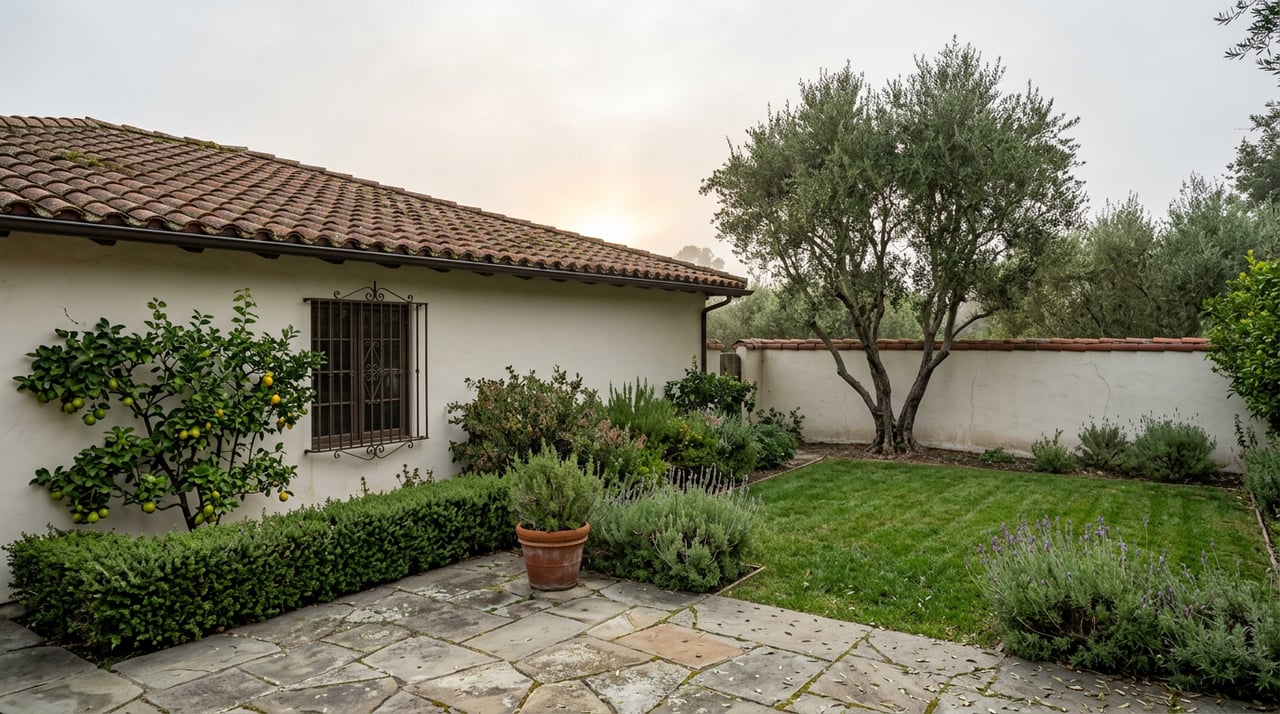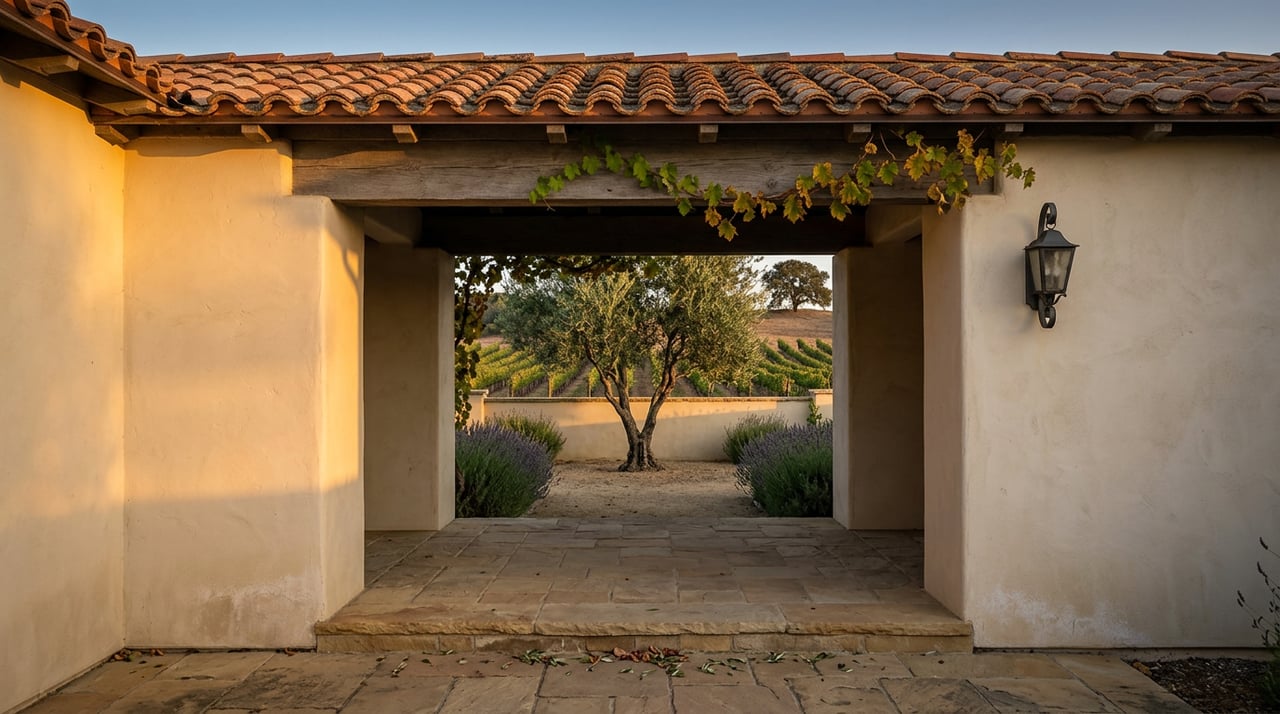
Drive down Mission Street in San Miguel and you'll see two buildings facing each other across the pavement, both close to two centuries old, both built with the same river sand and lime plaster technique the Spanish brought north. For most of the last twenty years, only one of them had actually finished telling its story.
That changed this spring. In May 2026, the all-volunteer nonprofit that runs the Rios-Caledonia Adobe opened a renewed Salinan exhibit to the public, closing out what the organization's own history page describes as three years of dedicated work. It's a small museum update in the grand scheme of things. But if you've lived in San Miguel long enough to have watched that gift shop shrink and those display walls go up one section at a time, it's the first time in a long while that both of the town's original 1800s buildings have been fully open and fully telling their whole histories at once.
Two Buildings, One That Took the Slow Road
Mission San Miguel Arcángel had its reckoning first, and it wasn't gentle. Founded in 1797 by Fermín de Lasuén as the sixteenth mission in the California chain, the church's interior frescoes, painted by Salinan neophytes under the supervision of Esteban Munras of Catalonia, have never been repainted and are considered among the most authentic surviving mission murals in the state. Then the San Simeon earthquake hit in December 2003. The mission sat roughly thirty-five miles from the epicenter but took enough structural damage that it closed to the public for six years. It reopened in September 2009, fully restored and, not long after, named a National Historic Landmark.
The Rios-Caledonia Adobe never had a single dramatic event like that. Built in 1835 using Salinan labor on land that belonged to the mission, the adobe went on to live several lives: residence, stagecoach inn, schoolhouse, post office, Wells Fargo office, even a dressmaking shop after the railroad came through in 1886. Restoration by the Friends of the Adobes began in 1968 and never really stopped, but the museum's account of the people who actually built the place stayed thin for decades. Board members didn't start shrinking the gift shop to make room for real exhibit space until 2018. By the end of 2019 they'd installed two new display walls and the first section of a pre-adobe era display. Building reinforcement work interrupted things again a few years later, and the display stayed officially "evolving" through at least 2023. It took until this May for the Friends of the Adobes to say, finally, that the work was done.
What's Actually in the Room Now
Walk in today and the first thing to your left is a permanent display of the T'epot'aha'l, the Salinan people who lived along this stretch of the Salinas River for at least ten thousand years before any of these buildings existed. Grinding stones donated by a local family named Ella Adams sit alongside artifacts used for processing acorns and nuts, and there's a preserved section of the original El Camino Real running through the room. Upstairs still covers the stagecoach and Wells Fargo years the adobe is better known for. What changed is that the museum no longer skips straight from empty valley to Spanish colonial stagecoach stop. It actually bridges the two.
700 S. Mission Street, San Miguel. Free admission, donations welcome. Open Friday through Sunday afternoons, with docent-led tours on weekends.
East of Town, the Same Kind of Patience
While the adobe was finishing its slow project, something similar was happening a few miles east. The Pleasant Valley Wine Trail has been described as the newest formal grouping of wineries in the Paso Robles area, but geographically it's really its own thing: a twelve-mile route through the rolling hills of the San Miguel AVA, off Highway 46 East, organized by a nonprofit board rather than a chamber or a tourism office. More than a dozen family-owned wineries and farms make up the trail, and the group's civic ties run deeper than a shared tasting-room map. Proceeds from its spring kickoff event benefit the Paso Robles Education Alliance, one of its charity weekends supports Woods Humane Society's adoption drive, and its scholarship program runs in partnership with the Rotary Club of Paso Robles Sunrise. That's not a marketing overlay on top of Paso Robles wine country. That's a wine trail that has grown into a local institution on its own timeline.
A few of the stops worth knowing by name:
- Villa San Juliette Winery runs a full-service restaurant with a European and California menu, live music on Sundays, and a farmhouse where guests can stay overnight.
- Four Sisters Ranch Vineyards & Winery sits on a hilltop with a wood-burning fireplace inside and views of Pleasant Valley that the New York Times once ranked among the best in Paso Robles wine country.
- Tackitt Family Vineyards, twelve miles east of Paso Robles, is small, family-run, and dog-friendly.
- Bon Niche Cellars is woman-owned and veteran-operated, with babydoll sheep and goats grazing a SIP-certified vineyard between the rows.
- Graveyard Vineyards looks out over the historic Pleasant Valley Cemetery and doesn't shy away from the name.
Why the Timing Matters
For most of its modern life, San Miguel has functioned as connective tissue rather than a destination in its own right: a mission stop for travelers heading toward Paso Robles wine country to the south or Camp Roberts to the north. One of its two founding buildings was a finished, National Historic Landmark attraction. The other was still visibly under construction. And the area's wine identity got folded into "Paso Robles" on nearly every map, even though the grapes east of town grow in their own AVA with their own soil and climate.
This year that arrangement stopped being quite accurate. The adobe finished its restoration in the same stretch of years the wine trail matured into an organization old enough to run its own scholarship fund and charity partnerships instead of just a shared tasting map. Neither project alone is a big headline. Together, they mean San Miguel now has two functioning anchors instead of one borrowed identity and one unfinished building.
The Weekend This Actually Buys You
If you already live here, the practical shift looks something like this. A Saturday afternoon now has a real reason to start at the adobe and walk across the street to the mission, instead of only ever doing one or the other. The fall calendar has an actual anchor event: Caledonia Day, held on the adobe grounds each September, has in past years brought out a dutch oven cook-off, a small car show, and the kind of community crowd that shows up for ice cream and barbecue rather than history alone. The east side of town has become worth stopping for on its own terms, whether that's a glass at Four Sisters Ranch or dinner at Villa San Juliette, rather than just the road you drive through on the way to Paso. A stop at San Miguel Olive Farm or Hambly Lavender Farm still fills an afternoon well. And after dinner at one of the family-run spots downtown, Jose's Country Kitchen or Dos Hermanos among them, Indian Valley Road still does what it's always done, offering one of the darker skies in the county for anyone who wants to see stars without driving to the coast.
None of this required new construction or a ribbon-cutting most people would notice. It just took two slow, decades-long projects finally catching up to each other in the same year.
Michele Smith has spent her career watching towns like San Miguel change in exactly this kind of quiet, compounding way, one finished project layered onto another until the whole place reads differently than it did five years ago. If you're curious what that kind of shift means for property values or timing anywhere in San Miguel, Paso Robles, or the wider North San Luis Obispo County, Request a Confidential Consultation with Michele Smith.