Are you dreaming about more land, more privacy, and a slower pace in Creston, but wondering what daily life there really looks like? That is a smart question to ask before you fall in love with a view or a long driveway. Rural property can be deeply rewarding, but it also comes with responsibilities that many buyers do not face in town. This guide walks you through the most important questions to ask before you buy in Creston. Let’s dive in.
Why Creston Feels Different
Creston is best understood as a true rural ownership market, not a suburban one with bigger lots. In the Creston Village Plan, San Luis Obispo County describes the townsite as relying on individual wells and septic tanks, and notes that community water and sewer would be needed to support more urban-style density.
That same plan also explains that services many buyers take for granted, like street trees, street lighting, and street sweeping, may not be appropriate there because of limited population, demand, and funding. In practical terms, that means you should approach a Creston purchase with a rural-living mindset from the start.
Start With Your Lifestyle Fit
Before you study permits, roads, or water systems, ask yourself a more basic question: what kind of life are you actually trying to create? Some buyers want full-time country living. Others want a second home, a hobby farm, or simply more space and privacy.
It helps to separate the idea of rural living from the day-to-day reality. A scenic parcel may also mean more maintenance, more driving, and more planning. If what you really want is suburban convenience on a larger lot, Creston may feel different than expected.
Questions to ask yourself first
- Do you want full-time rural living or a part-time getaway?
- Are you looking for privacy and acreage, or convenience with some extra elbow room?
- Which parts of country life feel exciting to you?
- Which parts could become ongoing chores?
Check Access Before You Check Finishes
One of the biggest practical issues in Creston is access. San Luis Obispo County maintains roadways in unincorporated areas, but that does not mean every road you use to reach a property is county-maintained. The Creston Village Plan notes that some areas have single access points, and many private roads are not maintained by any agency or association.
The same plan says many private roads are in disrepair. It also identifies State Highway 229 and O'Donovan Road as arterials, which helps frame how some buyers will move in and out of the area.
This matters for more than convenience. County roadway policy says its top priority is providing at least full all-weather access on county-maintained roads. That is a useful benchmark when you are evaluating whether a route will work comfortably through winter weather, delivery traffic, trailers, and regular daily use.
Access questions worth asking
- Is the main access road county-maintained, private, or shared?
- Is there more than one way in and out?
- Can larger vehicles, like fire engines, trailers, or delivery trucks, enter and turn around?
- How does the drive feel after dark or during rain?
- What is the true drive time from the parcel to groceries, work, and medical care?
Understand Emergency Access Reality
Rural distance affects emergency response too. The Creston Village Plan notes that ground ambulance response in the El Pomar-Estrella sub-area can exceed 10 to 20 minutes depending on location.
That does not mean a property is unsuitable, but it does mean emergency access should be part of your decision. A long driveway, limited turnarounds, or a single route in and out may feel very different once you think about daily safety and long-term ownership.
Water Is a Major Due Diligence Item
In Creston, water is often one of the most important parts of your investigation. San Luis Obispo County states that private well water is not regulated or monitored by an outside agency, so the property owner is responsible for making sure the water is safe.
The county also regulates and permits construction of community water supply wells and individual domestic wells, and says a new well cannot be started without Environmental Health approval. For buyers, this means well questions should be asked early and specifically.
Water questions to ask
- Does the parcel already have a usable well?
- Is there information about the pump and the well's operating history?
- Is there any available water-quality history?
- If you hope to improve the property later, will the current water setup support those plans?
Septic Matters More Than Many Buyers Expect
Septic is the other major rural system that deserves careful review. San Luis Obispo County uses its Local Agency Management Program, or LAMP, to regulate onsite wastewater treatment systems in non-sewered unincorporated areas.
County guidance says the minimum parcel size for onsite wastewater treatment systems and an onsite well is 2.5 acres, although planning area standards and zoning standards also apply. Because Creston properties often rely on individual wells and septic systems, parcel-by-parcel verification is especially important.
A septic system may work well for a home's current use, but that does not automatically mean it supports future expansion. If you are thinking about a guest unit, ADU, or a different level of occupancy, that question should be explored before you write an offer.
Septic questions to ask
- Is the septic system sized only for the existing home?
- Is there enough room for future improvements while respecting setbacks and system needs?
- Are there any known limits that could affect additions or changes in use?
Research Zoning Early
Zoning research can save you time, money, and disappointment. The county's buyer guidance recommends checking whether a parcel is in the Inland Area or Coastal Zone, identifying the land use category, reviewing planning area standards, looking for combining designations, and checking whether the recorded map adds restrictions.
The county also warns that combining designations can trigger more detailed review when a parcel has sensitive, hazardous, fragile, or resource-value features. Some projects require a Land Use Permit before a Building Permit, so early research matters.
In plain terms, do not assume that acreage automatically means flexibility. If you are considering a workshop, guest space, animal use, or future building area, confirm the property address or APN with planning staff and verify what applies to that specific parcel.
Ask About Future ADU or Guest Plans
Many rural buyers hope to add space later. If that is part of your plan, San Luis Obispo County's inland ADU guidance says a construction permit and zoning clearance are required, and properties served by wells or septic systems may also need added water or wastewater review.
This is one of the easiest places for expectations and reality to drift apart. A property may seem large enough for an ADU or guest setup, but the actual review may depend on water, wastewater, setbacks, and zoning conditions.
Outbuildings Need Verification Too
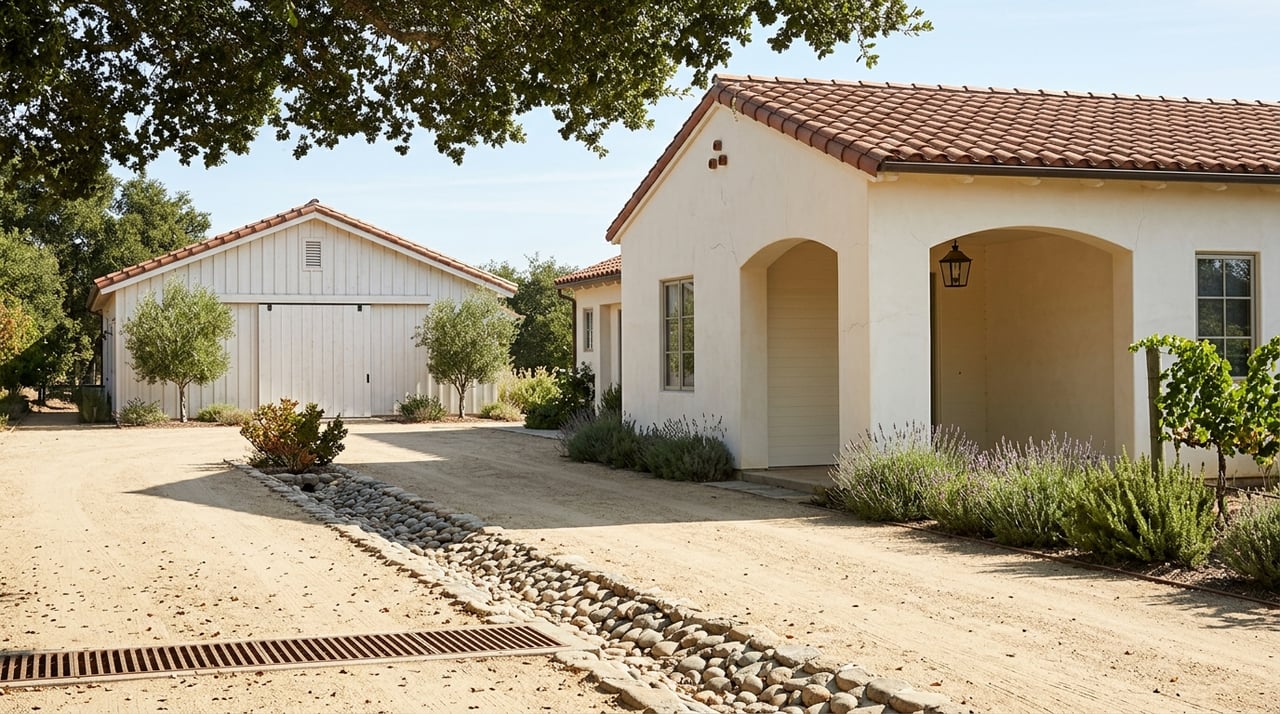
Barns, shops, sheds, and detached workspaces are often part of a property's appeal in Creston. Still, buyers should not assume every existing structure was built, placed, or used in a way that matches county rules.
County guidance distinguishes between accessory structures, detached workshops, guesthouses, sheds, and agricultural exempt buildings. For example, a one-story detached shed up to 120 square feet may not need a permit if it has no plumbing or electricity and still meets setback rules. Agricultural exempt buildings may avoid a building permit, but they can still require separate construction or grading permits and a site plan.
Outbuilding questions to ask
- Which structures are permitted as they exist today?
- Are any buildings agricultural exempt rather than fully permitted?
- Do current placements respect setbacks, wells, septic systems, and easements?
- Will you need grading, driveway work, or utility changes to use them the way you want?
Animal Uses Are Not One-Size-Fits-All
If you are buying with horses, livestock, or a hobby-farm vision in mind, verify what the parcel allows. San Luis Obispo County says animal keeping, whether incidental or principal, must comply with the Inland Ordinance or Coastal Zone Land Use Ordinance.
The county also notes that specialized animal facilities, including horse boarding and horse ranches, may trigger additional standards. That means there can be an important difference between keeping a few animals for personal use and operating a more intensive facility.
Be Honest About Rural Neighbors and Conditions
The lifestyle fit in Creston is not only about what you can do on your own land. It is also about what happens around you. County agriculture staff says complaints involving dust, noise, odor, and pesticide applications may be limited by state law and the county Right to Farm ordinance.
The county's Right to Farm guidance notes that lawful agricultural operations can involve truck traffic, machinery, lighting, smoke, insects, and other ordinary rural impacts. For many buyers, that is part of the appeal of living in agricultural country. For others, it can become a surprise if they expected quiet that feels more residential than rural.
Fire Readiness Is Part of Ownership
Wildfire preparedness should be part of your buying decision, not an afterthought. California law requires 100 feet of defensible space around structures, and CAL FIRE advises checking with local fire departments for any stricter standards.
San Luis Obispo County also provides a Fire Hazard Severity Zone map through the county fire department page. When you combine fire risk with the reality of road access, vegetation management, and annual upkeep, you get a clearer picture of what long-term stewardship will involve.
Fire and maintenance questions to ask
- Are you prepared to maintain defensible space every year?
- Does the road network support safe emergency access and evacuation?
- Will you be comfortable budgeting for vegetation control, drainage work, fencing, and road upkeep?
- Does the privacy and land still feel worth the maintenance calendar that comes with it?
A Simple Creston Buyer Checklist
If you are serious about a Creston property, focus on these basics before you get too attached:
- Confirm the exact access situation and road maintenance responsibility
- Understand real drive times from the parcel, not just from town
- Review well, pump, and water-quality information if available
- Verify septic capacity and future improvement limits
- Check zoning, planning area standards, and combining designations
- Confirm the status of barns, sheds, shops, and other outbuildings
- Ask whether animal uses match your goals
- Evaluate fire readiness, defensible space, and ongoing maintenance needs
Rural Living Works Best With Clear Eyes
Creston can offer space, privacy, agricultural surroundings, and a slower, more grounded way of living. The key is making sure the property fits not just your vision, but also your daily habits, long-term plans, and comfort with rural stewardship.
That is where careful guidance matters. If you are exploring acreage, ranch property, equestrian potential, or a country home in North San Luis Obispo County, Michele Smith eXp Realty of California Inc. can help you ask the right questions early and evaluate rural property with clarity and care.
FAQs
What makes Creston different from a typical suburban home search?
- Creston is a rural market where many properties rely on individual wells and septic systems, and some common urban services may be limited or absent.
What should buyers ask about road access in Creston?
- You should ask whether access is county-maintained, private, or shared, whether there is a secondary route, and how the road performs in all-weather conditions.
Why is water due diligence important for Creston rural properties?
- San Luis Obispo County says private well water is not regulated or monitored by an outside agency, so owners are responsible for making sure the water is safe.
How can septic systems affect future plans on a Creston parcel?
- Septic capacity, parcel size, setbacks, and local standards can limit additions, guest space, or other future improvements.
Do buyers need to verify zoning before buying in Creston?
- Yes, buyers should review land use category, planning area standards, combining designations, and any recorded map restrictions tied to the parcel.
Can you assume barns or sheds on a Creston property are fully permitted?
- No, buyers should verify the status, placement, and permitted use of each outbuilding rather than assuming existing structures meet current requirements.
What should buyers know about animals and hobby-farm plans in Creston?
- Animal keeping is regulated by local land-use rules, and more specialized facilities may be subject to additional standards.
How should buyers think about wildfire preparedness in Creston?
- Buyers should factor in defensible space requirements, access for emergency response, evacuation routes, and the ongoing cost of vegetation and land maintenance.